


THEATRE
SISTERS OF ’78
By Kristen Da Silva
|
|
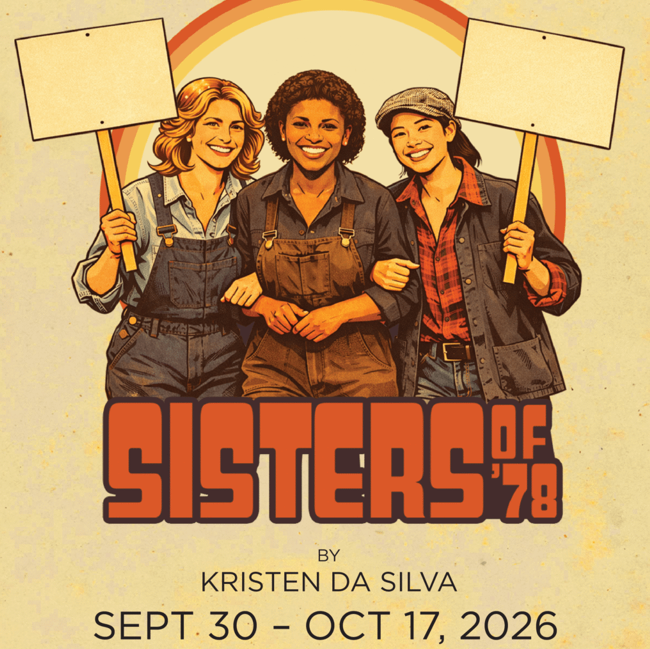
The next production on the Theatre Aquarius MainStage is SISTERS OF ’78, a fierce, funny and deeply moving ensemble drama by award-winning playwright Kristen Da Silva, inspired by one of the most significant labour disputes in modern Ontario history.
The play examines the 1978 Fleck Manufacturing strike in Centralia, Ontario, where a predominantly female workforce challenged dangerous working conditions, low wages, sexual harassment and an extraordinary show of police force. What began inside a small auto-wiring plant eventually became an important turning point in Canadian labour and women’s history.
For Da Silva, the story immediately suggested dramatic possibilities. “I was interested in writing a play inspired by Canadian history and the Fleck strike sort of grabbed me with both hands,” she says. Da Silva had encountered the dispute while studying Labour Studies and Political Science at York University, but realized how much of the story she had either forgotten or never known.
In March 1978, approximately 80 low-paid women walked off the job at Fleck; the plant produced automotive wiring harnesses, but workers faced broken toilets, rats, poorly maintained machinery, workplace injuries and sexual harassment. A local doctor reportedly referred to the factory as “the butcher shop.”
The workers had organized with the United Auto Workers, but negotiations stalled over issues that included the company’s refusal to accept the Rand formula, which required workers covered by a collective agreement to contribute union dues. The women voted to strike on March 7, 1978. The dispute would last 163 days.
“This was a real-life David and Goliath story about a small group of working Canadian women who took on their employer and the police to fight for their rights and wound up winning more rights for all Canadians,” says Da Silva.
She was also attracted by the personalities she encountered in historical accounts. Newspaper reports described the women as possessing enough “sass, ingenuity and gritty determination” that they even managed to make lawyers laugh during the eventual Labour Board hearing.
That humour is important because SISTERS OF ’78 is more than a history lesson. It places friendships and personalities at the centre of political struggle, allowing humour and conflict to coexist with larger questions of feminism, labour and workplace dignity.
The strike became increasingly bitter. Strikebreakers were driven through the picket line, while hundreds of Ontario Provincial Police officers were deployed. There were helicopters, surveillance, arrests and riot police. Yet the pressure ultimately strengthened the strikers’ determination and brought supporters from across Ontario.
For Da Silva, one surprise was discovering that such a remarkable story had not already received a major dramatic treatment. “I was sure there had to be a play or movie already out there,” she says. “I did a search. There wasn't one!”
She sent a proposal to Blyth Festival Artistic Director Gil Garratt, who quickly supported the idea. The play ultimately took four years to research and write, with the Blyth Festival providing guidance throughout its development.
“Mary Francis Moore read an early draft and was also immediately hooked by the Fleck women's story,” says Da Silva. “We were lucky enough to get her signed on to direct the premiere.”
At the heart of SISTERS OF ’78 is an eight-member ensemble. Madison Hayes-Crook plays Maeve, Alyssa LeClair appears as Joyce, Kait Post as Angie, Kirstyn Russelle as Natalie, Shaina Silver-Baird as Laurie and Cara Hunter as Margaret. Aiden Altow plays Andrew, while Geoffrey Pounsett appears as Glen. Several performers also take on additional roles as the world surrounding the strike expands beyond the factory floor.
That ensemble structure is particularly appropriate for a story about collective action. SISTERS OF ’78 is not centred upon one historical heroine. Maeve, Margaret, Joyce, Angie, Natalie and Laurie provide different perspectives on the women’s experiences, while their friendships are tested by the mounting pressures of the strike. The strike follows people home, alters relationships and divides those who support the workers from those who believe they should return to work.
Directed by Mary Francis Moore, AD of Theatre Aquarius; with set and costume design by Sean Mulcahy and lighting design by Siobhán Sleath who together create the physical world of the production.
There is something particularly appropriate about seeing SISTERS OF ’78 in Hamilton, a city whose history has repeatedly been shaped by struggles over wages, union recognition and working conditions.
There is also an interesting theatrical precedent at Aquarius. In September 1988, Theatre Aquarius first produced Bill Freeman’s play GLORY DAYS, examining the landmark 1946 STELCO strike. It was remounted as a musical in September 2006, exactly twenty years before SISTERS OF ’78 arrives on the same stage.
Eighty years after that STELCO dispute, another play about industrial action comes to the Aquarius stage. This time the story also examines gender, sexual harassment and the place of women within organized labour.
The Fleck women eventually won wage increases and acceptance of the Rand formula. Their struggle also helped encourage changes in labour law and pushed unions to address such issues as maternity leave, family responsibility leave, sexual harassment protection and childcare support.
For Da Silva, one of the most emotional moments came when SISTERS OF ’78 opened at Blyth earlier this summer. “We got to sit in the audience on opening night with several of the real-life women, which made it indescribably special,” she says.
Now the production comes to Hamilton. “We're all proud to bring this story back into the spotlight where it belongs,” Da Silva says, “and I'm especially excited to share it with Hamilton audiences this fall at Theatre Aquarius.”
More than four decades after the Fleck women walked onto a picket line, SISTERS OF ’78 gives audiences an opportunity to meet them again as workers, friends and neighbours who discovered how powerful solidarity could become.
- Brian Morton
www.theatre-erebus.ca
